

FIT RECOVERY 2.0 MEMBERSHIP
TRANSCEND ALCOHOL.
Make drinking alcohol seem as silly as chugging gasoline from the pump.
Weekly live group coaching with Chris Scott.
$297/month
Cancel anytime
30-day money-back guarantee on your first Membership payment.
Membership at a glance
- Weekly live group coaching with Chris Scott
- Two additional live 60-minute Zoom coaching sessions on the weekly schedule
- The complete Fit Recovery system, course library, and member community
Knowing why you want to stop drinking doesn’t automatically make you feel good without it.
Wanting to stop won’t necessarily resolve the restlessness, anxiety or sleeplessness alcohol leaves behind. Fit Recovery begins with Biochemical Restoration—improving that baseline so alcohol can lose its hold and recovery can demand less willpower.
WHAT HAPPENS WHEN BIOCHEMISTRY ISN’T AN AFTERTHOUGHT?
Dr. Kenneth Blum’s randomized, double-blind, 62-person inpatient SAAVE study found that the nutritional-adjunct group had a six-fold lower rate of quitting treatment early against medical advice, along with significantly better physical and behavioral, emotional, social and spiritual scores.
In Joan Mathews-Larson and Robert Parker’s six-week program combining Biochemical Restoration with therapy, 94% reported no sleep problems, 95% reported no depression and 89% were anxiety-free by week six. At follow-up ranging from one to three and a half years, 81 of the 95 participants reached—about 85%—reported themselves abstinent and stable.
That is why Fit Recovery starts with biochemistry—not because it is the whole answer, but because it can change the experience of everything that comes next.
THE HIERARCHY OF ALCOHOL RECOVERY
What is actually keeping me stuck right now?
With biochemistry as the foundation, the Hierarchy helps you recognize the psychological, social and spiritual factors still giving alcohol leverage, known as the Missing Links, and decide what deserves attention next.
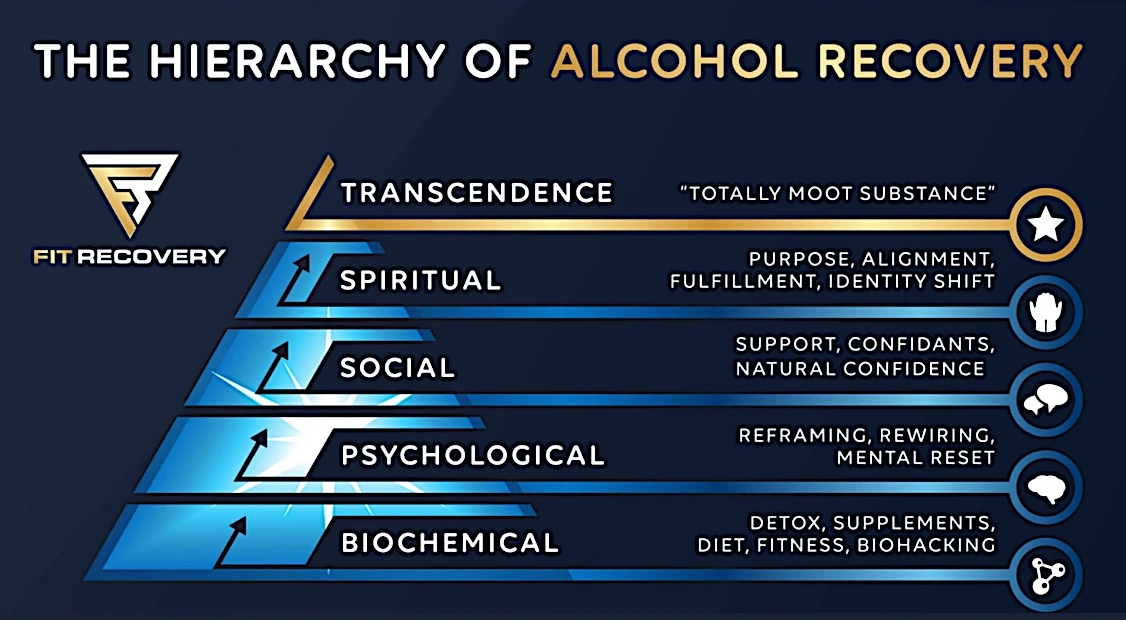
At first, the question is:
What’s keeping me stuck?
Eventually, it becomes:
How good can this get?
Transcendence: a life in which alcohol no longer matters.
WATCH KAI'S STORY.
I chose Kai's story from the many people who have shared their experiences with Fit Recovery. He describes what changed for him in his own words.
Kai — Fit Recovery 2.0 Member
More Fit Recovery reviews from Trustpilot:
“Lots of online stuff out there but only one Chris Scott!”— Karen Anderson, Trustpilot
“I have begun my journey and feel better already… Chris is an active listener. I highly recommend Fit Recovery.”— John Deisher, Trustpilot
“Knowing I had him in my corner has made all the difference… Fit Recovery is where you can finally make it stop.”— Lee Vollmer, Trustpilot

WHY I STARTED FIT RECOVERY.
Addiction-free since 2014.
Roughly 500 private clients coached.
More than 4,000 people through Fit Recovery programs.
After college, I spent about five years working in finance, including several years in high finance in Manhattan. Behind the scenes, my drinking eventually became severe enough that I needed medical detox.
I then spent three months in inpatient rehab and followed that with 90 AA meetings in 90 days. I took it seriously and learned from it, but I was still on the verge of relapse.
Discovering the biochemical side of recovery changed the trajectory. As my natural baseline improved, I had more clarity and more energy to change everything above it. Those pieces became Fit Recovery.
Fit Recovery 2.0 began as a standalone course. More than 4,000 people have gone through it over the years, and the course sold for $2,000 without today’s weekly coaching.
The Membership builds on that foundation with live guidance and a community applying the same system in real life.
THREE LIVE 60-MINUTE ZOOM COACHING SESSIONS ON THE WEEKLY SCHEDULE
The course gives you the system; the live sessions help you apply it.
Live Q&A, focused discussions and practical coaching help you decide what deserves attention next and work through the situations that come up as you apply Fit Recovery to your life.
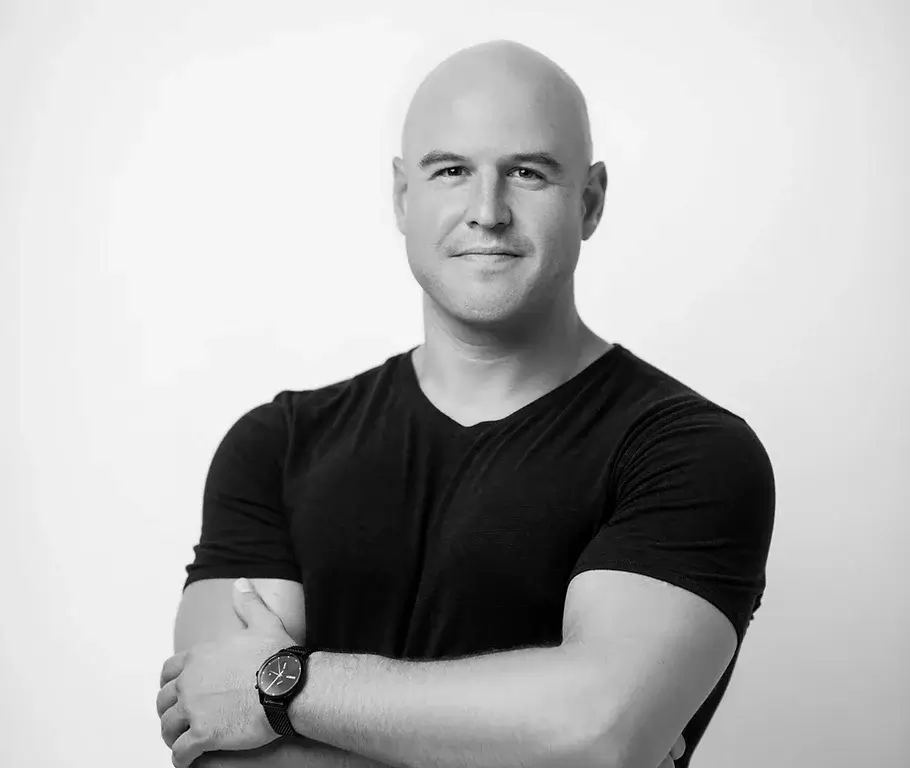
CHRIS SCOTT
Weekly 60-minute live Zoom coaching.
Bring the questions you’re actually dealing with to the person who built Fit Recovery.
Can’t make a call? Email Chris your question. He’ll make sure you get an answer, either personally by email or during an upcoming live coaching session.
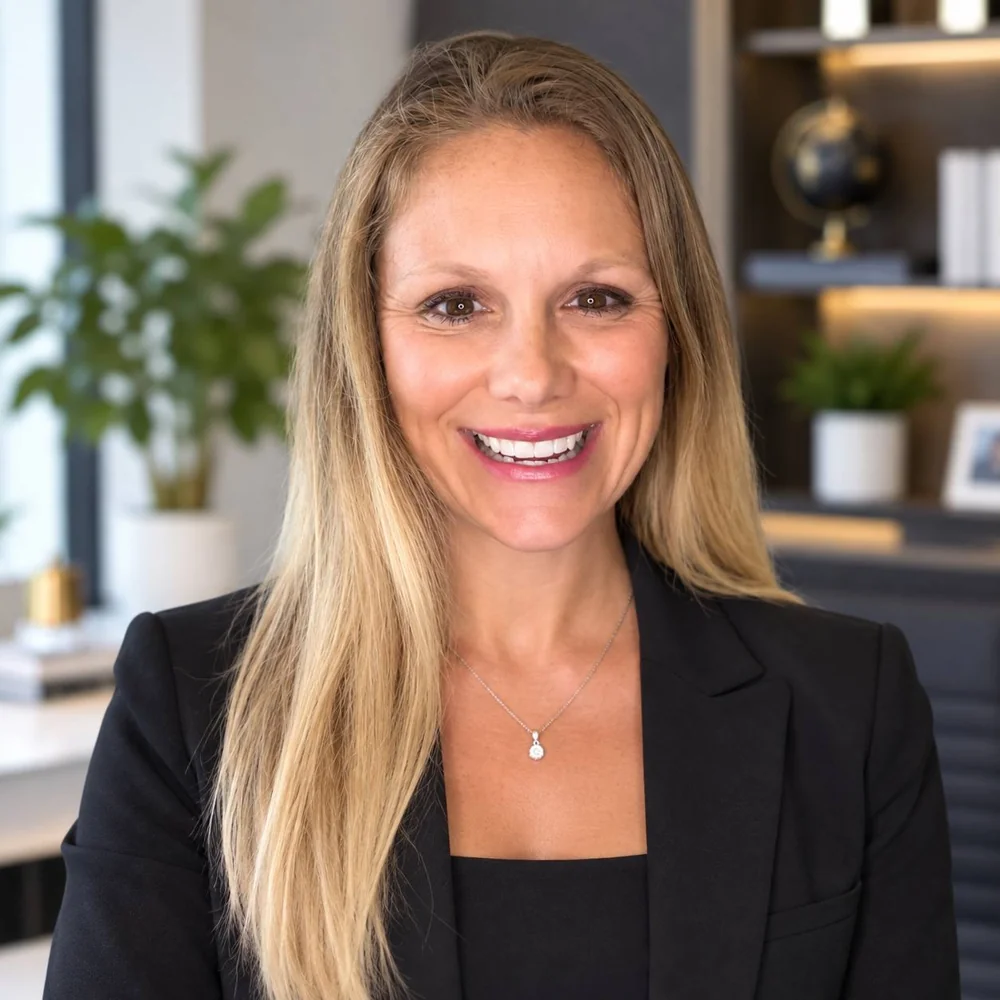
TANA PEACO
Certified Coach
Weekly 60-minute live Zoom coaching.
Tana has used Fit Recovery herself and is certified by the Academy of Addiction & Mental Health Nutrition. She has worked with nearly 100 one-on-one clients.
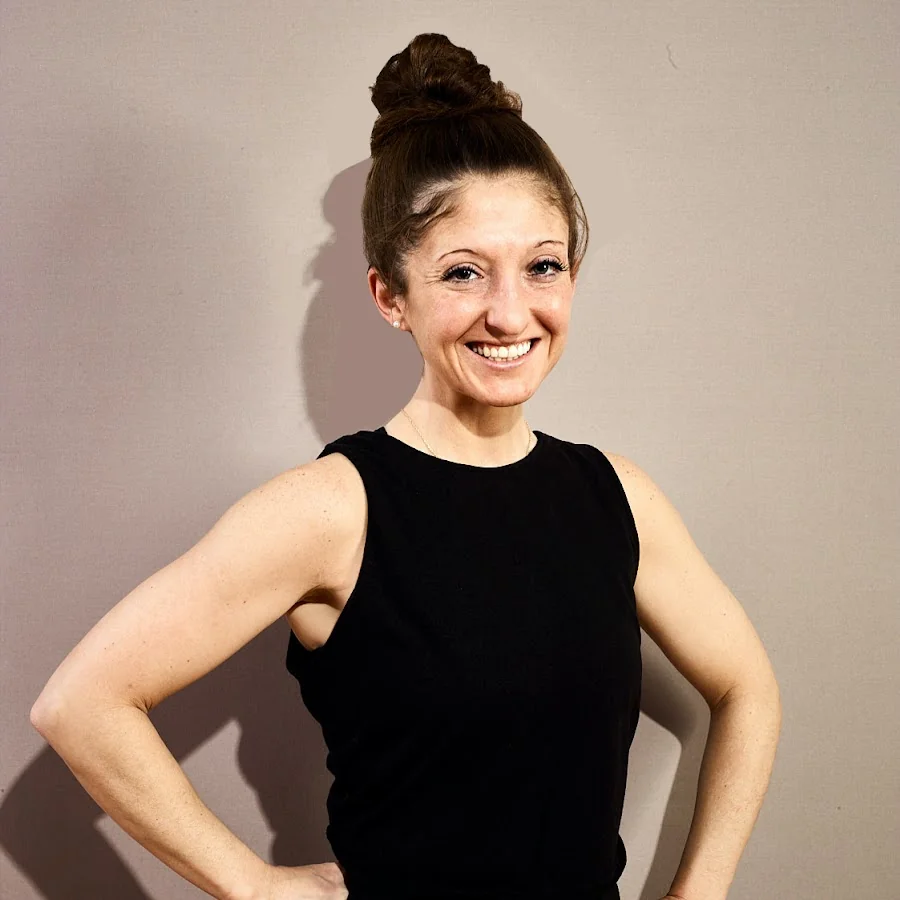
ALYSSA
Certified Coach
Weekly 60-minute live Zoom coaching.
More than a decade addiction-free, Alyssa brings lived experience and a practical understanding of what it takes to build a life beyond alcohol.
Attend live, submit a question in advance, or use the recording when you cannot attend.
WHAT HAPPENS WHEN YOU JOIN
Everything now lives inside one Fit Recovery 2.0 path, with a clear place to begin and depth whenever you need it.
Begin with the original Fit Recovery 2.0.
Build the biochemical foundation, then explore the parts of the Hierarchy relevant to you.
Apply the system with help from the weekly live coaching sessions whenever you need it.
HOW ALCOHOL BECOMES IRRELEVANTBiochemical Restoration, the Missing Links, and how the Hierarchy becomes a guide to life beyond alcohol.Explore the Fit Recovery approachClose the full explanation
Reach the point where alcohol becomes a totally moot substance, so you can put that energy back into the rest of your life.
Fit Recovery combines Biochemical Restoration, Reframing, the Hierarchy of Alcohol Recovery, live coaching and a community built around actually putting the system into practice.
You already know enough about alcohol to quit.
That may be the most frustrating part.
You know what drinking does to your sleep. You know the feeling of waking up after a night you didn't need, realizing that the first few hours of your day have already been taxed. You know how much better you look, think, train and work when alcohol isn't dragging behind you.
You can decide at 9 a.m. that you're not drinking tonight, then find yourself renegotiating that decision by 6.
You've made rules: only weekends, no liquor, never alone, two drinks maximum, thirty days off. You may have stopped completely for weeks or months and proved to yourself that you can do it.
You may also be unusually disciplined everywhere else. You work hard, manage pressure, take care of people, make difficult decisions and follow through on things that other people avoid. You may train harder now than most people did at twenty-five.
You certainly don't lack access to information; there are books, podcasts, videos and apps explaining alcohol from every imaginable angle.
And yet this one problem can keep surviving all of that intelligence and discipline.
If another rule, another resolution or another piece of information were enough, you would have solved it by now.
So what keeps happening?
You've been fighting the craving in the wrong place.
Knowing why you want to stop drinking doesn't automatically make you feel good without it.
Repeated heavy drinking disrupts the systems involved in calm, reward, motivation, mood, sleep, stress and energy.
The balance between GABA and glutamate changes. Dopamine and endorphin signaling change. Sleep architecture deteriorates. Stress chemistry and blood-sugar regulation are disrupted.
The gut and liver take a beating, while alcohol simultaneously interferes with the absorption, storage and utilization of nutrients that the brain and body need in order to repair themselves.
None of this is obscure science. There are thousands of studies describing different pieces of what alcohol does to human physiology.
Yet once someone decides to change their drinking, the conversation often moves straight to psychology: change your beliefs about alcohol, recognize that it isn't really a reward, interrupt the habit loop, build different routines.
Reframing alcohol is a core part of Fit Recovery, but it isn't where I start. Understanding that drinking is bad for you doesn't immediately reverse the changes in sleep, reward, stress regulation and nutrient status that developed while you were drinking.
Worse, the person experiencing all of this usually has no idea how far the baseline has moved.
When the change is gradual, you can't see the depletion from inside it.
Think of a thermostat being turned down one degree at a time. If the process is slow enough, everyone inside the house adjusts with it.
Eventually someone walks in from outside and says the place is freezing, while the people who live there genuinely don't know what they're talking about.
Alcohol can work the same way.
You feel fine, except for the 3 a.m. wake-ups. Your energy is good, except for the afternoon crash. Your mood is stable, except for the anxiety that appears for no obvious reason.
You're still productive, except that everything takes more effort than it used to. Ordinary evenings feel slightly flat, so a drink becomes an efficient way to make one feel interesting.
Those exceptions gradually become your definition of normal. Alcohol then changes how you feel within minutes, giving your brain a powerful reason to remember it. A craving isn't proof of weak character; it can reflect the relief a depleted system has learned to expect from drinking.
What happens when the biochemical foundation is addressed first?
Researchers and clinicians have spent decades investigating different parts of this problem, including amino-acid precursors, reward chemistry, vitamin and mineral deficiencies, blood sugar, stress physiology and the other effects of chronic alcohol exposure.
Some of the clinical findings were striking.
In a controlled inpatient pilot using an amino-acid and nutrient formulation, none of the nutrient-treated patients required as-needed benzodiazepines, compared with 94% of controls. A larger randomized, double-blind inpatient study later reported a six-fold reduction in patients leaving treatment prematurely when a nutritional adjunct was added. In separate outpatient work, the group receiving the SAAVE neuronutrient formula showed a 73% overall recovery rate at ten months.
Joan Mathews-Larson and Robert Parker combined Biochemical Restoration with psychological therapy in a six-week program. Sixty of the original 100 participants had previously failed at least one alcohol-treatment program. At follow-up ranging from one to three and a half years, 81 of the 95 participants reached reported themselves abstinent and stable, about 85%.
The clinical findings complement a much larger body of research into the systems alcohol disrupts. Together, they give us a practical reason to include Biochemical Restoration in recovery:
If alcohol has altered and depleted the brain-body system, actively repairing that system should be part of recovery.
Fit Recovery draws on more than a decade of studying neurochemistry, nutrition, sleep, exercise, the gut-brain connection and psychology, then applying what I learned while coaching real people. I brought that work together around Biochemical Restoration as the foundation of a broader recovery system.
It doesn't mean chasing biochemical perfection or turning recovery into an endless supplement project. It means starting with the one level we already know alcohol has been acting on.
Alcohol changes the brain and body. So we start there.
When the foundation begins recovering, the entire experience can change. Sleep becomes restorative again. Energy comes back. The nervous system becomes less volatile. Normal life begins producing rewards that had become strangely muted.
This is one of the patterns I've seen repeatedly over the years: when someone's natural baseline starts feeling genuinely good again, alcohol loses leverage.
There is less need for a chemical rescue at the end of the day because there is less to rescue them from.
Workouts, food, quiet mornings and time with other people become rewarding again. Work takes less effort, and life starts regaining the color that drinking had gradually taken out of it.
The goal isn't merely to become better at resisting alcohol.
It's to raise the baseline until alcohol starts becoming obsolete.
And that is only the foundation.
Reframing alcohol is powerful. It just isn't the whole system.
Many online alcohol programs focus on a useful insight: alcohol remains attractive while it is seen as a reward, a way to relax, a social lubricant or a deserved escape at the end of a hard day.
Change those associations and the desire to drink can change dramatically. I agree with that, and Fit Recovery teaches Reframing extensively.
The ultimate expression of it is simple: bingeing on alcohol should eventually look about as appealing as pulling into a gas station, taking the nozzle off the pump and chugging gasoline.
Reframing addresses one possible Missing Link. In my coaching experience, people may have up to five, and they are not all psychological.
Biochemical deficiency or imbalance is the closest thing to a universal starting point among people who have been drinking heavily because alcohol itself acts on these systems.
For someone else, isolation and boredom during free time become important. There is nothing particularly mysterious about sitting in the same house after work with nothing compelling to do and discovering that alcohol can turn an ordinary evening into an event. The pandemic made this pattern even more common.
Another person may be carrying unfulfilled yearning: the persistent sense that life is smaller than it should be, that some important talent is being wasted, that something meaningful has been deferred.
Alcohol is exceptionally good at turning that signal down for an evening. It is useless at answering it.
Lifestyle design matters too. A sedentary, sleepless, sunless, overstimulated, chronically stressed and often lonely existence has become normal in much of modern life.
Put a human being into that environment and then introduce a substance that can reliably change mood within twenty minutes, and the disproportionate appeal of that substance stops being mysterious.
Reframing alcohol marketing and cultural conditioning is worthwhile. But changing someone's opinion of the advertising leaves a larger problem intact if the life underneath the drinking remains physiologically and emotionally impoverished.
Alcohol problems are often treated as though everyone needs to uncover one grand emotional explanation for why they drank. That hasn't been my experience.
People develop physical dependence for all kinds of reasons: chronic stress, divorce, trauma, genetic vulnerability, prenatal exposure, years of social drinking that gradually escalated, or simply enough repeated exposure over enough time.
Sometimes a person gets caught in a biochemical loop and eventually discovers that there wasn't some enormous hidden defect in their personality that needed to be excavated.
When alcohol is removed safely and the brain-body system starts recovering, sleep and clarity often return. It becomes easier to see which parts of life still need attention. For many people, that clarity becomes a launchpad.
The Hierarchy of Alcohol Recovery
The Hierarchy is not a checklist of things that must be perfected in sequence.
It is a map. At first, it helps answer a practical question: what, if anything, is still giving alcohol leverage?
BIOCHEMICAL
Detox. Supplements. Diet. Fitness. Biohacking.
PSYCHOLOGICAL
Reframing. Rewiring. Mental reset.
SOCIAL
Support. Confidants. Natural confidence.
SPIRITUAL
Purpose. Alignment. Fulfillment. Identity shift.
TRANSCENDENCE
A totally moot substance.
Someone does not need perfect dopamine before working on relationships, and nobody needs to become spiritually perfected before alcohol can stop mattering.
The Hierarchy simply keeps us from pretending that every person has the same problem.
The remaining Missing Link might be Reframing, social isolation, a lifestyle with too little natural reward, or the gap between what someone is doing with life and what they know they are capable of doing with it.
And sometimes restoring the biochemical foundation creates so much clarity that the rest begins moving almost on its own.
Then something happens that is far more interesting than sobriety.
Eventually, the Hierarchy flips.
At first, the Hierarchy asks:
What's keeping me stuck?
Later, it asks:
How good can this get?
The Biochemical level stops meaning repair alcohol-induced depletion and starts meaning: How strong, energetic, fit, clear-headed and resilient can I become?
The Psychological level stops meaning: How do I prevent myself from drinking? It becomes: How do I think better, perform better and create virtuous cycles that compound over time?
The Social level evolves from avoiding triggers and finding support into something larger: Who deserves to be around me? What relationships make life richer? What kind of people do I want to become close to?
And the Spiritual level changes from What emptiness was I escaping? into questions about purpose, alignment, fulfillment and making the best possible use of one's talents.
The direction of the entire framework reverses.
It stops being a map for repairing what alcohol damaged and becomes a framework for continuing to improve a life that is already getting good.
This is where people begin to understand what I mean by Transcendence.
Alcohol is no longer the project.
Life is.
I found this out in the wrong order.
After college, I spent about five years working in finance, including several years in high finance in Manhattan. From the outside, my life looked successful.
Behind the scenes, my drinking eventually became severe enough that I needed medical detox.
I then spent three months in inpatient rehab and followed that with 90 AA meetings in 90 days.
I know conventional recovery from the inside. I took it seriously and learned from it, but I was still on the verge of relapse.
Discovering the biochemical side of recovery changed the trajectory because, for the first time, I stopped treating nutrition, amino acids, minerals, exercise, sleep and the brain-body connection as peripheral details.
As my natural baseline improved, I had more clarity and more energy to change everything above it.
I rebuilt my body. I changed the way I thought about alcohol. I changed the way I spent my time. I became more deliberate about my environment and relationships. Eventually I found purpose in work that mattered enormously to me.
The process stopped feeling like an endless effort to avoid one substance and started feeling like an opportunity to see how much better life could become without it.
Eventually, alcohol didn't feel forbidden. Drinking it seemed as ridiculous as chugging gasoline from the pump.
I've been addiction-free since 2014, and in the years since I've coached roughly 500 private clients, including founders, physicians, executives, hedge-fund managers, billionaires and household names.
More than 4,000 people have been through Fit Recovery programs.
That experience has exposed me to an enormous range of drinking patterns, personalities and reasons people get stuck.
It has also reinforced one observation again and again:
When people start feeling genuinely good as their normal baseline, and then begin building a life that feels better still, alcohol has a very difficult time competing.
That's Fit Recovery in a nutshell.
Information is everywhere now. Judgment is more valuable than ever.
When I started Fit Recovery, good information about alcohol, supplements and the brain was difficult to find. Today, articles, podcasts and AI-generated protocols are readily available. I use these tools myself.
The harder question is which information deserves attention and how it applies to the person reading it.
A protocol can look sophisticated while drawing from mediocre sources. Two studies can appear contradictory until someone understands the context behind both of them.
A supplement that makes sense for one person may be irrelevant for someone else. And a person can spend months optimizing nutrients when the thing actually making alcohol attractive is that every evening of their life is boring.
The value of coaching is knowing where to focus when a real question arises. It isn't about needing me to interpret every detail of your life.
In many cases, removing alcohol safely and restoring the foundation brings considerable clarity on its own.
Sleep may not be returning as expected, supplement advice may conflict, or a difficult weekend may be coming up. Sometimes Reframing makes sense intellectually while one part of alcohol still feels valuable. In other cases, the biochemical work has gone well and the next Missing Link has little to do with alcohol.
These are the conversations we've been having inside Fit Recovery for years. Membership gives you the opportunity to bring your questions to me during weekly live group coaching, along with two additional live 60-minute Zoom coaching sessions on the weekly schedule with the Fit Recovery team.
WAITING ISN'T NEUTRAL.
You already know what another month of the same pattern looks like: interrupted sleep, lost mornings and more time negotiating with alcohol.
The cost isn't only what drinking takes away. It's the work, relationships and experiences that keep getting postponed. There is no perfect week to begin, and no need to wait for a crisis.
WHAT YOU GET
- Weekly live group coaching with Chris Scott
- Two additional live 60-minute Zoom coaching sessions on the weekly schedule
- Complete Fit Recovery course library
- Premium Fit Recovery community
How long should you stay?
There is no required Membership term. The goal is to make alcohol irrelevant, not to keep people attached to a recovery identity.
Some people will use Fit Recovery intensely for a period of months while alcohol is still the central problem in their lives. The biochemical foundation improves, the desire to drink fades, routines change and the old cycle loses momentum.
Others will stay longer because, somewhere along the way, the reason they are here changes.
The Hierarchy flips.
The conversations stop being dominated by cravings and drinking rules and begin moving toward fitness, relationships, confidence, business, purpose, identity and whatever the next level of life looks like.
Someone who originally joined because they desperately wanted alcohol out of the driver's seat may find, a year later, that alcohol barely comes up anymore.
They're still here because they're stronger than they were six months ago, their life is getting better, they value the coaching and community, and there is something deeply satisfying about helping a newer member through a problem that once seemed impossible.
Other people get what they came for and leave. We consider that a successful outcome too.
Stay while Fit Recovery is an asset in your life. When it isn't, cancel.
There is no annual commitment and no penalty for deciding you're finished.

TRANSCENDENCE.
Alcohol is no longer the project.
Your life is.
Make alcohol moot.
JOIN FIT RECOVERY — $297/MONTH
Cancel anytime. 30-day money-back guarantee.
FIT RECOVERY 2.0 MEMBERSHIP
$297 / MONTH
Cancel anytime.
30-day money-back guarantee on your first Membership payment.
WEEKLY GROUP COACHING WITH CHRIS
TWO ADDITIONAL WEEKLY COACHING SESSIONS
THE COMPLETE FIT RECOVERY COURSE LIBRARY
Fit Recovery 2.0, 6 Weeks to Alcohol-Free, supporting courses and the podcast library are organized around Biochemical Restoration, supplements, Reframing and the psychological, social and spiritual Missing Links.
MEMBERS APPLYING THE SAME SYSTEM
Want more personalized guidance? You can add a Personalized Recovery Blueprint, which includes a custom supplement regimen, or a private strategy session with Chris to your Membership. Ongoing 1:1 coaching is also available by application. These are optional paid services.
Join Fit Recovery
Fit Recovery 2.0 Membership — $297 / month
Fit Recovery 2.0 Membership is $297 today and $297/month until you cancel. Your first Membership payment is covered by our 30-day money-back guarantee; renewals and optional add-ons are not. Membership Terms
Loading the secure checkout… If the form doesn’t appear, use the secure checkout link below.
Trouble with the form? Open the secure SamCart checkout instead; it has the same price and agreements. If you’ve already submitted payment, check for a receipt before trying again.
Fit Recovery provides education and coaching, not medical care or detox.
MEMBERSHIP DETAILS
Live calls, recordings and advance questions
Optional personalized and private support
You can ask the team about adding personalized support at any point after joining. Options include a Personalized Recovery Blueprint, a private strategy session with Chris, or an ongoing Private Coaching relationship. Membership and private support can be combined. Private sessions and ongoing coaching are subject to fit and availability.
Billing, cancellation and the guarantee
$297 USD today, then $297 each month until canceled. The 30-day money-back guarantee covers your first Membership payment only, once per person. It does not cover renewals or optional add-ons. To cancel, email chris@fitrecovery.com or reply to any Fit Recovery email.
Fit Recovery provides education and coaching and is not a substitute for medical care. Alcohol withdrawal can be dangerous. Anyone who may be physically dependent on alcohol or at risk for withdrawal should seek appropriate medical guidance before abruptly stopping alcohol use.