
I’ve had a long history with alcohol. I’m 61 years old, which means I’ve had a relationship with alcohol for 40 years, starting when I was around 17 or 18.
I’m originally from the Philadelphia area in Pennsylvania, where I lived for a significant part of my life until I was about 40.
I started drinking when I was 18, mainly enjoying beers with my friends.
I stuck to beer for a long time. At that time, the drinking age in New Jersey was 18, while in Pennsylvania, it was 21. I soon realized I could take short trips.
There was a town called Milford, New Jersey, about an hour’s drive away. I would go there to buy cases of beer and then bring them back to Pennsylvania.
During the years when I was around 18 to 21, I found ways to navigate around the system. I would often go to Milford to buy a case of beer.
Eventually, I discovered a small bar in Milford, New Jersey, where I would sit and enjoy my time.
I usually went there during the day and would remain until evening, staying until it started to get dark before driving home.
Looking back, I can’t believe I made that hour-long drive home safely.
One night, I left a small bar in Milford, New Jersey, and when I woke up, I found myself in my car—parked right in the middle of someone’s lawn.
I had no idea where I was, but I suspected I was still in New Jersey because I didn’t think I had driven far before pulling over.
It was morning, and I found a note when I looked at my windshield.
I kept it, and I still have it to this day.
The note says, “Bert, this guy is drunk. Let him sleep. – Dan.”
I kept this note because, at the time, I found it amusing. Looking back, I can still laugh about it, but it was also a significant moment. The note essentially said, “Hey John, you just blacked out from drinking.”
I didn’t realize the weight of this message at the time. It was my first sign that something was wrong, but I failed to recognize it.
I had simply blacked out.
In my younger years, I often drank beer and considered myself a weekend warrior throughout my 20s.
Every Friday, I would buy a case of beer, which was all I could afford at the time.
I would drink that entire case over the weekend, finish it by Monday, and then return to work as usual.
I was definitely social, but there were also times when I found myself alone.
Most of the time, I drank that entire case of beer by myself.
Sometimes, friends would come over and bring more beer, but it was a mix of both social and solo drinking.
On weekends, my friends and I would hang out and drink all weekend long.
During my 20s, there were situations that kept us up drinking the entire weekend, which resulted in some pretty rough Mondays during those years.
In my twenties, I continued down a troubling path, and during that time, cocaine became increasingly popular.
I experimented with it, indulging more than I should have.
I considered myself a weekend warrior, but it was clear that this lifestyle was not good for me.
Eventually, I got married and welcomed a newborn son into the world.
My wife, who had also enjoyed partying, had chosen to put that life behind her after becoming pregnant.
She made the responsible decision to step away from that lifestyle, but I found myself still entrenched in it.
Although she tolerated my behavior for a while, she eventually decided to leave and returned to her parents’ house with our son.
That experience hit me hard, so I went to a rehabilitation center.
I spent 30 days in inpatient rehab, and after I got out, I managed to stay sober for about two weeks.
However, after that period, something miraculous happened—I joined a gym for the first time in my life.
The gym had racquetball courts, and I began playing racquetball.
I became really passionate about it, completely immersed in the game.
This newfound interest actually helped me stop drinking, and I maintained my sobriety for five years.
In my early 30s, I was essentially following a self-imposed recovery program for my fitness.
After five years, I attended a baseball game with a friend and decided to have a beer.
I started drinking again, but during those years, I managed to keep it under control, especially after the birth of my son.
I didn’t engage in binge drinking, and it didn’t cause any problems at work or with my family.
Overall, I handled things pretty well throughout a good part of my 30s.
Towards the end of my 30s, I visited the doctor one day and said, “Doctor, I know I have a problem with alcohol, and I want to address it.”
At that time, I was still living the life of a weekend warrior. I explained to the doctor, “I tend to drink on the weekends, and by Friday, I just want to have a drink. Sometimes, I end up drinking much more than I intended. Is there anything you can do to help me manage this situation?”
He said, “Oh, so you mean like a cocktail?” and I replied, “Yeah.”
At that time, in 1997, Xanax wasn’t as widely recognized as it is now.
I told my doctor that I was drinking too much, yet instead of addressing my alcohol problem, he prescribed me Xanax.
Looking back, it’s hard to believe he didn’t consider the implications of my drinking.
This approach is particularly concerning because, as you probably know, it’s similar to what happened with Whitney Houston.
I didn’t receive a significant disclaimer, but the doctor did prescribe me a relatively low dose—around one milligram, which is the minimum.
For several years, this dosage worked well for me, and I rarely felt the need to increase it.
Often, I would just take half a dose at nighttime.
In total, I took Xanax for approximately 10 to 15 years.
It started out as something I did only on the weekends, but over the years, it has become something I do every day.
By 2005, I was around 40 or 45 years old. I left Pennsylvania and moved to Florida, where I lived for a year without drinking at all.
Sometimes, when you relocate, it seems like a fresh start can make a difference, but in my experience, that doesn’t always hold true.
I could explain why this concept doesn’t really work, but it’s a longer discussion.
I had many things around me. I spent practically my entire life in Pennsylvania, always wanting to leave.
Then, I found myself in a new place: Miami Beach, where I lived by the ocean.
I had plenty of activities to keep me busy.
I was still playing racquetball, exercising outdoors, and enjoying the warm weather and the ocean.
All these distractions made it really easy for me to forget about my past.
I didn’t think much about alcohol, but every evening before I went to bed, I took Xanax—usually half a pill, and sometimes a whole one.
I relied on it every night.
For a while, it helped me, but eventually, it started to have negative effects on me.
After I left Florida, where I had lived for a year, I got a job in California and moved to Northern California, specifically Santa Cruz.
I’m even wearing my Santa Cruz colors right now! Santa Cruz is known for being a hippie town, a party town, and a beach town—all of which might not have been the best fit for me.
When I arrived in California, I was amazed by how easily accessible alcohol was; it was available everywhere and at any time.
Back in Pennsylvania, if you wanted to buy liquor, you had to go to a state store, and those stores were closed on Sundays.
So, the constant presence of alcohol around me was quite a shock!
I stayed in California for a while, but I ended up having a neck problem, which forced me to give up playing racquetball.
Without a sport to engage in, I started drinking more, and my alcohol consumption began to increase.
However, I eventually discovered volleyball, which provided me with a new outlet for sports.
Despite this new activity, I continued to drink.
It wasn’t until I turned 50, while I was still in California, that things really took a turn for the worse.
My struggle with alcohol use disorder escalated significantly.
At 50, I got laid off from a company where I had worked for 21 years, and I also lost my girlfriend.
I was very unhappy about turning 50 and felt deeply depressed during that time, which is when my problems began to intensify.
I struggled with a binge-drinking pattern for the next ten years.
My life was marked by duality: on one hand, I was super healthy.
I played volleyball, went to the gym, and took vitamins and supplements.
However, on the other hand, when something negative happened, like feeling down about work or just finishing a tough volleyball session and feeling sore and tired, I would reach for a drink.
This often triggered my binges, which could last for two solid weeks.
At first, my drinking started off slow, but over a few days, it escalated quickly to the point where I was drinking around the clock.
I would drink hard cider for about four hours, eat something, and then fall asleep.
After a couple of hours, once the alcohol wore off, I would wake up and start drinking again.
This cycle continued throughout the night and into the early morning, perpetually around the clock.
The binges eventually became so severe that when I fell into one, I abandoned everything I had been doing to take care of myself, like taking vitamins and supplements.
I started craving unhealthy food and indulging in it. I would go to McDonald’s and order four sausage, egg, and cheese McMuffins in one sitting.
It was really bad.
I neglected my self-care. I didn’t shower, shave, or brush my teeth.
It was horrible what I was doing to myself.
At the end of two weeks, I always managed to pull myself together.
What happened was that I would drink until I couldn’t drink anymore.
I realized that once the two weeks were over, I had to get my act together.
So, I simply stopped. It was a bit challenging at first, but not overly difficult.
However, as the years went by and I fell into a binge pattern, the cycles became more frequent.
With each binge, it got harder to break free from them.
By the end of those ten years, the binges became increasingly difficult to escape, to the point where it felt genuinely frightening.
Usually, I picked up a drink because I had some kind of problem.
However, once I took that drink, I became addicted instantly, and that set me off.
I ended up staying home and not engaging in anything.
I didn’t talk to anyone, respond to text messages, or check my emails.
I completely ignored my work.
I struggled to maintain a girlfriend; it just wasn’t possible for me.
I met girls, but they left me quickly.
It was a really tough time, and I felt like I was in a deep hole.
I found it very confusing because I experienced these healthy periods.
I knew there was something wrong, but I spent years trying to maintain just one or two good days.
It was perplexing because sometimes I would have those days, and other times I would have three or four in a row.
Then, out of nowhere, I would binge.
It took me years to accept the reality of my alcohol use disorder.
I struggled with it repeatedly, asking myself why this was happening to me each time.
I constantly wondered why I couldn’t just drink like a normal person.
Some days, I could manage just two drinks, and I would even mark it on the calendar, writing down, “Okay, two.”
But despite those moments, I found myself fighting against the truth of my situation for a long time.
I have Irish heritage, which makes sense considering my background.
When I was around 14, I experienced a traumatic event, but I don’t believe that was the main cause of my drinking.
The truth is, when I begin drinking, it feels like an instant reaction for me.
I definitely see it as a physical addiction.
During my time in California, I discovered GTS Kombucha.
I used to enjoy their regular kombucha, but then they released a new product in a black bottle that contained a bit more alcohol.
Curious about its alcohol content, I called the company and asked, “How much alcohol is in this black bottle?”
They informed me that it contains less than 0.5% alcohol, which is the same as the alcohol content of regular kombucha.
I started thinking to myself, “No, it’s not just that; it’s more than that.”
Anyway, I began drinking Kombucha, and having one at night felt good and helped me relax.
Then I moved on to having two at night and eventually three.
Before I knew it, I was buying them by the case!
At that time, around the age of 60, I was trying out an alternative.
I would buy it by the case, but I never got drunk from it.
Even if I drank six of them, I didn’t feel drunk.
However, I found myself drinking more and more and purchasing it by the case.
I have Irish heritage, and it definitely plays a role in my life.
My grandfather struggled with alcohol use disorder, and my dad had periods where he faced similar challenges.
He managed to keep it together overall, but there was always Seagram 7 in the house.
This connection to my lineage and my Irish background is significant to me.
Years ago, I tried to stop drinking, and I attended AA meetings to help with that.
During this time, I came up with a clever response to people who asked, “Why aren’t you drinking?”—a common question for those of us with similar struggles.
My response is, “I’m Irish, so I don’t drink.”
It’s a good point because not everyone understands it at first.
It’s somewhat similar to a joke, but it’s serious.
I’m Irish, so I don’t drink, yet I still get asked about it.
Nowadays, I don’t mind explaining my reasons.
If people want to hear my whole story, I’m happy to share it.
I’ve moved past all of that now.
For many years, I kept my drinking a secret from everyone.
Only a few people knew—my sister, my son, and some other family members, of course.
But I didn’t share it with anyone else; I kept it very private.
For years, I tried to find a way out, but the frustration only grew.
I used to mark my calendar on the days I binge-drank, and I have calendars from about five years with all those days checked off.
It was difficult to escape that pattern, and I just wanted it to stop.
I felt deep down that there was something physiological at play, especially concerning my fluctuating health.
After I saw myself in a picture after an alcohol binge, I managed to stop drinking.
It wasn’t easy, but I did it.
The first couple of days were terrible—actually, I’d say the first week was really rough.
Over the years, I developed a pattern for recovering quickly and getting back into shape.
However, each time I went on a binge, it took me longer to bounce back.
As time went on, I found it increasingly difficult to get out of those binges.
Just before I was finally able to stop for good, I was doing some desperate things to try to escape the binge.
I reached out to rehab facilities and sent frantic messages to my family saying, “Help me.” It was truly scary.
Despite all of that, I managed to quit on my own without any external assistance.
Typically, it would take a couple of months, around three months.
However, as time went on, I noticed that they began to get closer to each other.
I could see it clearly on the calendars; I knew it was happening.
Additionally, their time together started to last longer as well.
The last binge I had was during my time in Hawaii when the pandemic hit and we went into lockdown.
I was on a contract job, and once it ended, I had to move out of my place.
I was in a really bad place mentally, and I started drinking—at that point, I just didn’t care anymore.
I was buying bottles of champagne and drinking them regularly.
It lasted a month.
During that time, I had to go to detox to recover.
My son helped me get into a detox facility, which was part of a national hospital chain, but I won’t mention the name.
Once I arrived, they put me in a bed situated in a hallway where nurses could easily see me.
I lay back in bed, but they didn’t provide me with any medication—nothing at all.
Whenever I tried to get up, the nurses would tell me, “Lay back down.”
I couldn’t handle it there.
I don’t know how many hours I was inside, but it wasn’t long, so I called my son and said, “Hey, come get me.”
During the binge of a lifetime, I mentioned that took place in Hawaii, I went to a detox facility and quickly left.
My sister helped me find a great place here.
The facility provided medically assisted detox services.
The doctor was nice, and I stayed there overnight.
They administered a lot of gabapentin along with several other medications.
When I finally woke up, it took me an entire day to feel normal again.
I only spent one night there, and I couldn’t stand it any longer, so I decided to leave.
Thankfully, they helped me out and introduced me to gabapentin during my stay.
After leaving detox and returning home, I unfortunately started drinking again.
My son dropped me off at the detox center and left, but I found a bottle of champagne and began drinking.
When he came back and found me, he was really upset.
I don’t know why; I think it just happened because it was there. Maybe it wouldn’t have occurred if it hadn’t been in my house. But yeah, I still don’t know. I was not happy with myself.
A few years ago, I watched a TED Talk by Claudia Christian about Naltrexone and the Sinclair Method.
Initially, I thought, “I’m not doing that. I don’t want a pill to help me keep drinking. I want to stop drinking altogether.”
So, I dismissed the idea.
However, after a particularly crazy binge, I found myself at home with some gabapentin, which led me to visit my doctor.
When I mentioned Naltrexone, my doctor replied, “I’ve never heard of that.”
He pulled it up on his screen, read a bit about it, and said, “Okay, we can try that.”
He prescribed me a treatment plan that helped me overcome my binge.
I was given gabapentin and Naltrexone.
It took about three to seven days for me to taper off.
Every couple of hours, I would take Naltrexone and gabapentin, along with some drinks.
I actually used gabapentin alongside another method to wean myself off gradually until I could stop altogether.
After that, I maintained this approach for about a year.
When it’s prescribed, it’s usually directed to be taken one pill a day.
The Sinclair Method, on the other hand, recommends taking it an hour before you drink.
That’s what I did.
I’m not sure how long I followed that method—maybe six months or close to a year; I can’t quite remember.
I was drinking but in smaller amounts.
I didn’t go on any binges, which helped me stay stable for the most part, even though I was still drinking.
Then I came across Chris Scott’s Fit Recovery YouTube video titled “How I Quit Drinking by Rebalancing My Brain Chemistry.”
That title caught my attention, and when I watched the video, I realized it was exactly what I had been searching for a long time.
It resonated with me and felt like a perfect fit for my recovery journey.
After that, I discovered your Fit Recovery YouTube channel and started watching those videos as well.
It was amazing.
After watching that first video, I quickly decided to try some DLPA (DL-Phenylalanine), glutamine, and tyrosine.
I started taking them in the morning.
It felt like a light switch had been flipped off.
That was almost a year ago.
Since that first day, I haven’t had any thoughts of cravings or anything.
For me, that specific combination of amino acids has been nothing short of a miracle.
I felt good.
I know that DLPA gives me a strong sense of well-being and helps me feel clear-headed.
It’s almost like the clarity and energy I get from a cup of coffee but without the stimulating effects.
It also really helps me with my depression.
I definitely experienced depletion.
One of the first things I learned from Chris Scott when I watched that video was about how post-acute withdrawal symptoms can last up to a year.
That really blew my mind, and it makes total sense.
This is why I could never stop: I would go on a binge and then manage only three months of recovery, so I never fully achieved complete repair.
I was just doing short stints of recovery, and then I would be back to my old habits.
As someone who is now 61, I’ve spent a long time battling this issue.
It has truly been a struggle.
I want to mention that I was really ready to give up.
I had gone through so much with it, and when I turned 60, I remembered the promise I made to myself years ago—to stop drinking by the time I was 55.
I knew that after 55, your body starts to decline, and it’s not wise to introduce alcohol into the mix.
Unfortunately, I didn’t keep that promise, but when I reached 60, I was finally able to turn things around.
So, considering these factors and the fact that I live in Hawaii, I can say that I was genuinely ready for a change.
I believe that if we took an average person off the street, like a homeless individual, and provided them with those three specific amino acids, it could be effective.
However, I also think that it’s important for the person to be mentally prepared as well.
One of the great things about Fit Recovery 2.0 is the focus on the three targeted amino acids I mentioned: phenylalanine, glutamine, and tyrosine.
However, there’s so much more that you’ve introduced me to that has significantly helped me.
While recovering and transforming my body and regenerating neurotransmitters, I’ve found that various other elements have improved my daily life.
The program introduced me to CBD oil (CBD Pure) and encouraged me to start drinking chamomile tea.
I experimented with chamomile tea years ago when I was trying various remedies to help me sleep.
I tried many different herbs and other options, but chamomile tea never really worked for me, and I didn’t particularly enjoy the taste.
However, when I heard Chris Scott mention that he used to use eight tea bags in his brew, I thought, “Oh, okay.”
I went out to find a good chamomile tea, and I discovered a brand called FGO by Googling “best chamomile tea.”
This tea comes from Egypt and contains only chamomile—no other flowers, honey, or herbs are added.
The taste is absolutely fantastic!
While I don’t use eight teabags, I typically use three for my preferred flavor.
I take CBD oil and add it to my chamomile tea, mixing it in.
It doesn’t blend perfectly, but that’s alright.
Sometimes, the combination affects the taste, so I’ll opt to drink straight chamomile tea instead.
However, I enjoy adding CBD oil to my chamomile tea more often than not; it’s quite the nightcap!
Chamomile offers numerous health benefits beyond just aiding sleep.
It can also help with digestion and alleviate feelings of depression, among other advantages.
There are many health benefits associated with chamomile tea that Chris could likely list even better than I can.
I’ve learned so much from the program—there’s just so much to take in.
That’s the great thing about Fit Recovery 2.0; it’s not just about stopping drinking, which I did.
It’s also about discovering all these new things.
I’ve picked up so many insights and resources from it that I haven’t even had the chance to try them all out yet.
Chris and Fit Recovery 2.0 have introduced me to so many things —it’s amazing!
I’m not stopping anything; instead, I’m starting something new.
It’s just fabulous.
It’s a fabulous life.
Fabulous!
One of the best aspects of Fit Recovery 2.0 is that I have now been sober for almost a year.
However, I feel like I’m still just beginning.
I recognize that there are so many more things I can achieve, particularly in terms of physical health and mental well-being.
This program goes beyond merely stopping drinking; it also addresses various aspects of overall health.
I’ve learned a lot from it about general well-being—not just about taking specific herbs, but about what I put into my body, my diet, meditation, and a range of other practices.
It’s truly remarkable.
This program is unique; no one else is doing what Chris Scott and Matt Finch are doing.
I primarily work from home in Hawaii, which I consider a blessing.
When I’m not working, I enjoy playing beach volleyball, a sport I’ve been involved with for many years, and I continue to play here in Hawaii.
I’m also a surfer.
I like to go to the gym and cycle.
I enjoy many outdoor activities, especially hiking.
There are so many great hikes around here.
The sun offers amazing benefits.
It provides us with essential nutrients like vitamin D and plays a significant role in combating depression.
When I lived on the East Coast in Pennsylvania, it was gloomy most of the time. It’s a completely different experience when you have access to sunlight.
I really admire how Chris and Matt refer to themselves as “fine-tuned machines.”
It reminds me of how impressive this program is. I watch Chris and Matt’s podcast every day—they’re a part of my daily routine.
I see Chris and Matt as working together seamlessly.
They’ve come such a long way with the program, and it truly inspires me.
I aspire to reach the same level of success that they both have achieved.
That’s the best part about this journey.
We’re not just giving up drinking; we have so much to explore.
It’s not just about stopping something; it’s about starting a new life.
And it’s an amazing life—a truly wonderful one.
I feel so lucky to have a very supportive family.
My son is amazing; he has stood by me throughout this battle, and I’m so happy to be in a good place for him.
I also want to mention my sister, who has been incredibly supportive.
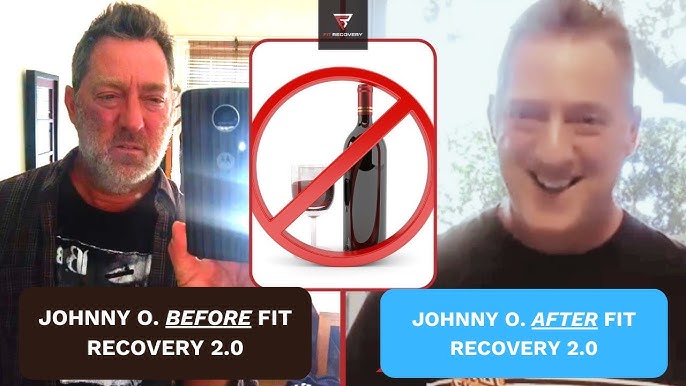
Fit Recovery 2.0 is an in-depth online alcohol rehab program. One of its best features is that it’s not just an online course; I’m actively participating in it.
The format includes a good mix of video, text, and other materials.
Throughout each section, coaches prompt you with questions like, “How did you feel about this?” or “What strategies did you use?”
After responding, you receive feedback from the coaches.
This interaction makes it feel like someone is with you throughout the course, which is a fantastic aspect.
It’s “revolutionary.”
I want to use that word.
We need to educate all of the country’s medical doctors about Fit Recovery 2.0.
Thank you, Chris and Matt. Aloha!